// basic statistics · theory
Through statistics, we can collect and analyze data. Statistics can be used to summarize a humongous amount of data and explain what the data is trying to say in simple terms. In this section, certain concepts of statistics that are useful for understanding how data modelling algorithms work are explained. These concepts also help us immensely when trying to understand the output generated from various statistical and machine learning models.
The various statistics which are used commonly can be divided into two broad parts: Descriptive Statistics and Inferential Statistics.
Under Descriptive Statistics, we don't try to draw any major inferences but simply try to understand the features of our dataset. Thus, we use descriptive statistics to simply "describe" our data.
On the other hand, the second sub-section is Inferential Statistics, where we use statistical methods to understand certain phenomena and see whether those phenomena can be explained by our data or not. Long story short, we don't simply describe our data and summarize it; we go a step further and draw inferences from the sample data and test whether those conclusions can be applied to the real world or not.
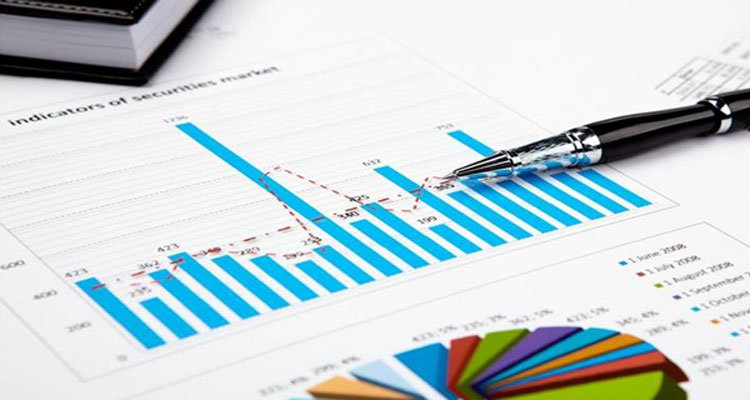
Simple statistics that describe the various characteristics of our data. These characteristics can be found using 4 kinds of descriptive statistics: Measures of Frequency, Measures of Central Tendency, Measures of Variability, and Measures of Shape, where each kind of these descriptive statistics explains some feature of the dataset. Each of these statistics plays a crucial role in data analysis and can be said to be the A, B, C of statistics.
Certain statistics are used to explain not only the sample data at hand but to draw inferences about the population from where the sample was drawn. Various statistical methods are used to answer different questions. In this section, certain important concepts that are required for understanding the numerous statistical tools used to draw inferences from the data are mentioned. These statistical tools include Correlation Coefficients, t-Tests, F Tests, and Chi-Square.
 TM
TM