// modeling · theory
In the Supervised and Unsupervised section, various kinds of problems are explored that can be solved using different types of algorithms. For example, when we have to predict a value, it is called a Regression Problem where we can create models using Linear Regression, Decision Trees etc. When there is a need to classify data into predefined groups, we call it a classification problem where we can use Logistic Regression, Support Vector Machines etc. All such types of model come under supervised learning.
When we have to perform segmentation of data we face clustering problems using methods such as K-Means, DBScan etc. There are also optimization problems where we use methods such as Factor Analysis, Principal Component Analysis etc where we optimise our data by reducing the number of features. These algorithms work in an unsupervised environment.
However, in both these cases, we don't consider the time factor and this is where Time Series comes in. Time Series models are created when we have to predict values over a period of time, i.e. forecasting values.
Below are four blogs. The first blog 'Introduction to Time Series Data' deals with the types of data that we come across when we perform time series and explores the various characteristics of time series data. The second blog 'Averaging Techniques' explores the most basic techniques to solve forecasting problems. The third blog 'Smoothing Techniques and Time Series Decomposition' explores some medium level techniques while the fourth blog 'ARIMA Family' deals with a set of complex methods that belong to the ARIMA family to solve the forecasting problems.
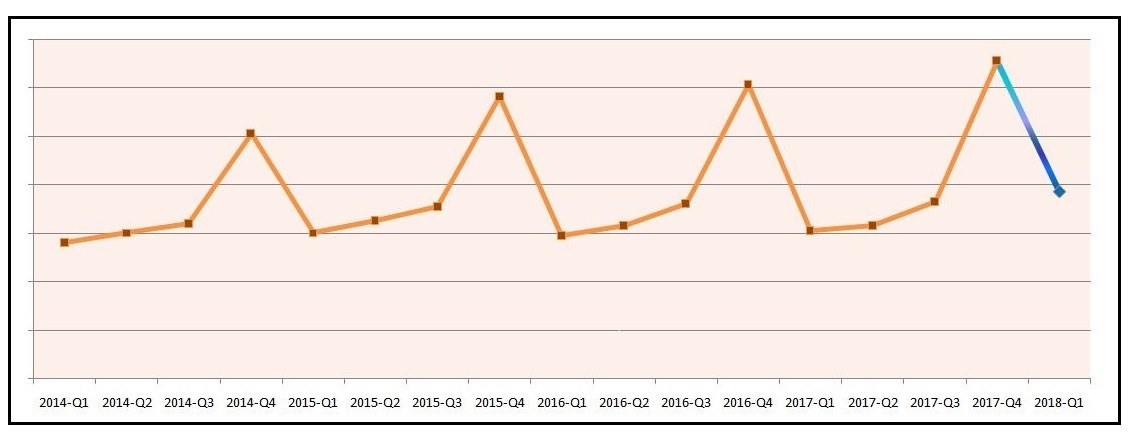
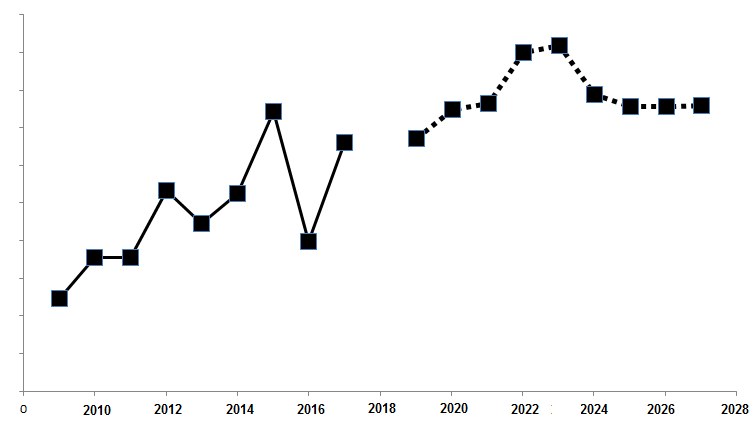
When there is a time component involved in the data, the method of analyzing such data requires a different approach. There are different kinds of data that have a time component involved such as Cross-Sectional Data, Panel Data and a combination of both known as Time Series Data. Such data can be made up of four components: Trend, Seasonality, Cyclicity and Irregularity. In this blog, time series data and its characteristics are understood.
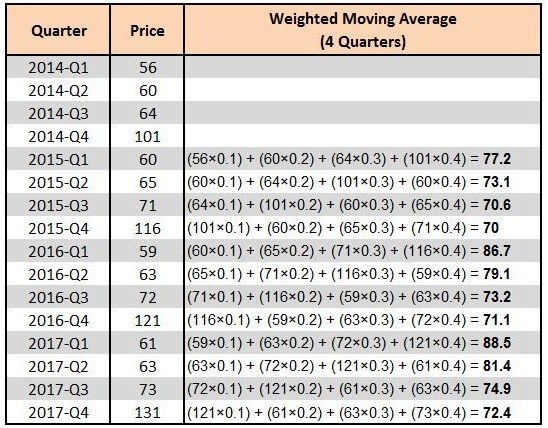
There are a couple of methods that can be categorised as 'Level-I' techniques for time series analysis. Among such techniques are the various types of averaging models. In this blog, three types of averaging models, Simple Average, Moving Average and Weighted Moving Average, have been explored. In simple average, the mean of the independent variable is considered as the forecasted value, whereas in weighted and moving weighted average, weights are assigned to previous observations and are then used to come up with the forecasts.
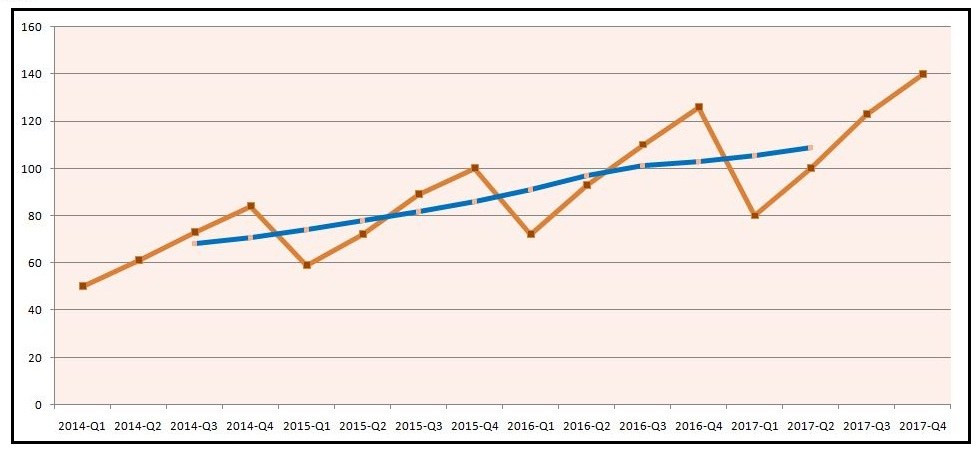
Categorised as 'Level-II' techniques, Smoothing Techniques and Time Series Decomposition act as the mid-level methods for forecasting. Exponential Smoothing Techniques, also known as the ETS Model, is a method where the forecasted value is a function of the past value and the past time period error. Among the most common types of ETS Models are Single Exponential, Double Exponential and Triple Exponential. On the other hand, Time Series Decomposition uses the components of Time Series Data for forecasting.
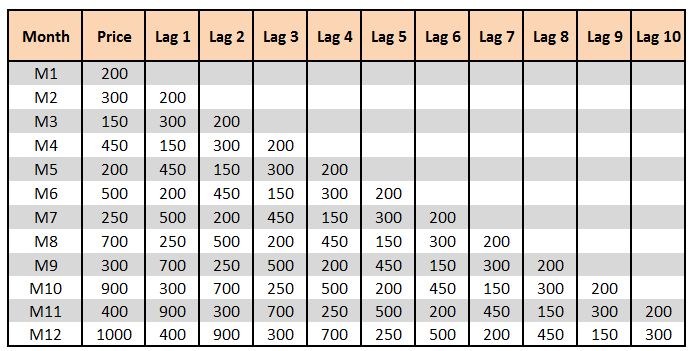
Auto-Regressive Integrated Moving Average is a high-level technique. In this blog, different variants of ARIMA such as AR, MA, ARMA and ARIMA are explored, as any of the methods can be used depending upon the requirement. The concept of Statistical stationarity is also explored, along with the various methods of finding if the data is stationary or not. The autocorrelation (ACF) and partial autocorrelation (PACF) functions used to identify the model orders, along with differencing methods used for stationarizing time series data, are also discussed.
 TM
TM