// inferential statistics · f tests
F-test is any statistical test in which the test statistic has an F-distribution under the null hypothesis. In a way, F-test is a term for all the statistical tests that use the F-distribution.
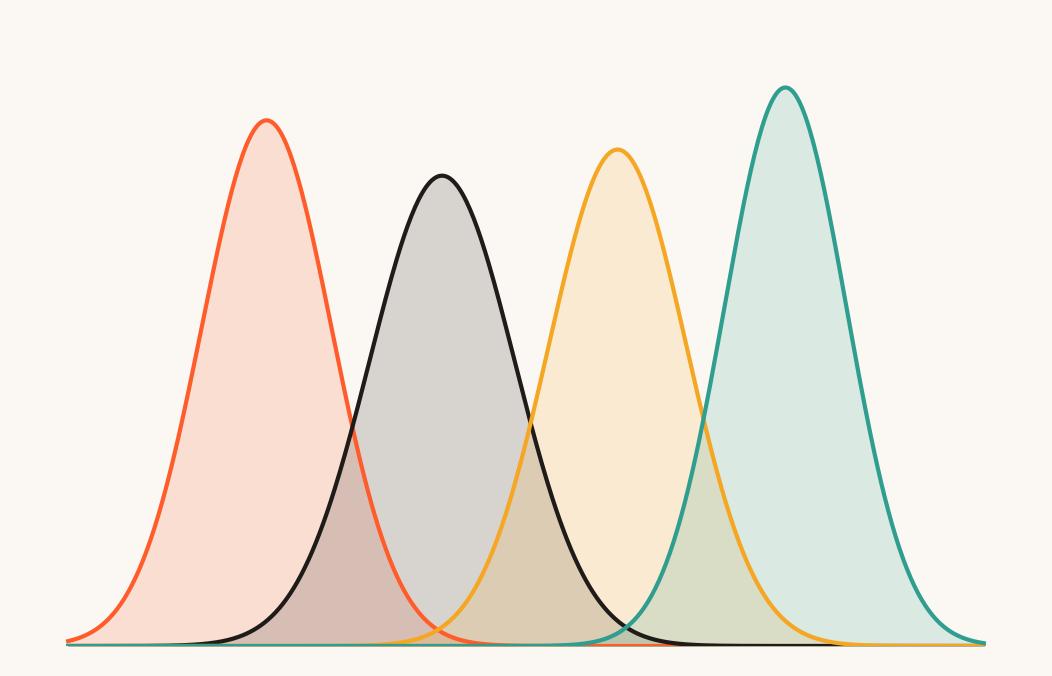
So far Z tests and T-Tests have been discussed. All such tests have their own distribution and own formula to calculate their Z or T value. There are scenarios where hypothesis testing cannot be done by using these tests and that's where the F test becomes useful. F tests use the F statistic which is the ratio of two variances. These F Tests use the F Distribution. This F ratio is very useful and is used in various tests (often used in comparing statistical models). One of the most popular usages of it is for comparing two regression models, to find which model is statistically significant.
Thus, unlike the Z Test or T Test where the means of two data sets are compared to draw inferences, in an F Test the F statistic is used to compare the two variances to find if the means of the two groups are statistically different from each other or not.
There are multiple tests where the F statistic is used; however, the most common F Test is the Analysis of Variance. Analysis of Variance, more commonly known from its abbreviation ANOVA, is just another hypothesis test which, unlike the T and Z test (whose calculations are based on data distribution and concepts of central tendency, particularly the mean), is based on variance. ANOVA tests help us to accept or reject the null hypothesis. ANOVA is used in situations where Independent two sample T-tests can also be used; however, the F Test is more flexible and useful than the T-test. Here the Null Hypothesis is that there is no difference among the groups while the Alternative Hypothesis states otherwise. To give an intuitive idea of what such scenarios are, let's take a look at some examples where ANOVA can be used:
It is important to understand the terms 'Dependent variables', 'Independent variables' and 'Groups/Levels'. In the above examples, the dependent variable is the one which depends upon external factors; in example 1, 'weight' will be the dependent variable while the independent variable will be the type of Diet, and all the subcategories in this independent variable will be known as groups or levels.
There are multiple variations of ANOVA which make the test suitable for different types of data. Some of the most popular types of ANOVA are One Way ANOVA, Factorial ANOVA, Repeated Measures ANOVA, MANOVA etc. Some of these types of ANOVA have been discussed below.
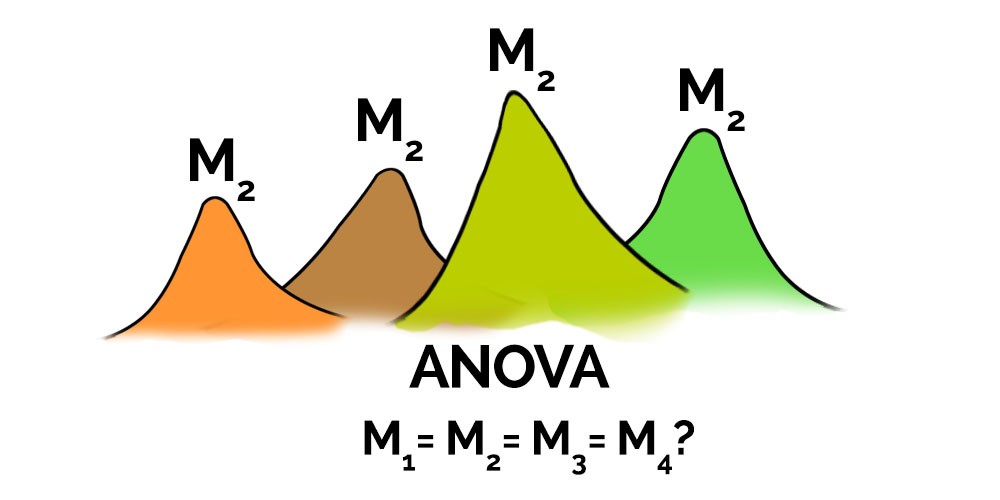
One Way ANOVA is used to compare the means of the groups of an independent variable to see if the groups are significantly different from each other or not.
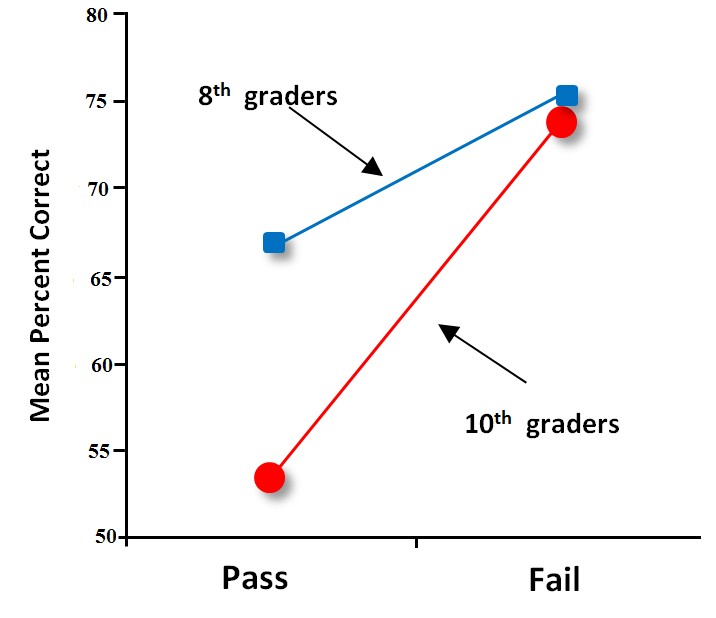
It is an extension of One Way ANOVA where groups of multiple independent variables are compared to find if they are statistically significantly different from each other or not.
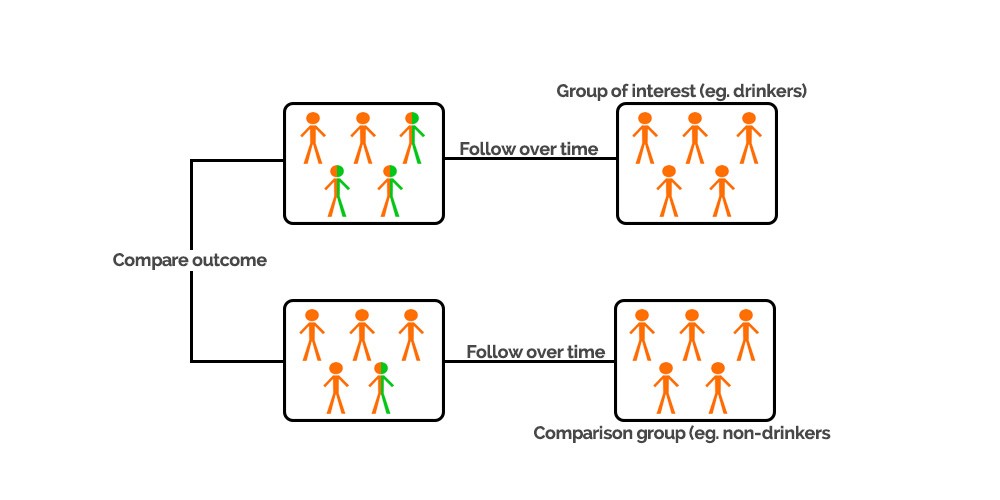
Repeated Measures ANOVA tests related groups. Here ANOVA is used to examine the difference in mean on the dependent variable over more than two time intervals.
 TM
TM